Turning “Leggo my Eggo” from a catchphrase into something you could actually play.
Creative direction across the brand’s website, interactive games, and a Nickelodeon scavenger hunt, bringing the Eggo world to life in new ways.
Eggo’s world was already familiar: the breakfast table, the inventive dad, the waffle everyone wanted. My job was to help turn that world into something people could step into and play with. As creative director at Arc Worldwide, I led the redesign of LeggoMyEggo.com, developed interactive games, and worked on The Great Eggo Chase with Nickelodeon. From the start, I focused on uniting our creative and technical teams around one clear vision. This way, the brand’s playful story would feel connected, whether someone was on the website or in a media partnership. Every part of the experience needed to deliver on that same, unmistakable idea.
The challenge was to bring Eggo’s humor into every interaction and make sure the creative idea worked everywhere. I worked closely with design, production, and media partners, paying attention to every detail, from game instructions to how the experience fit into the publisher’s world.
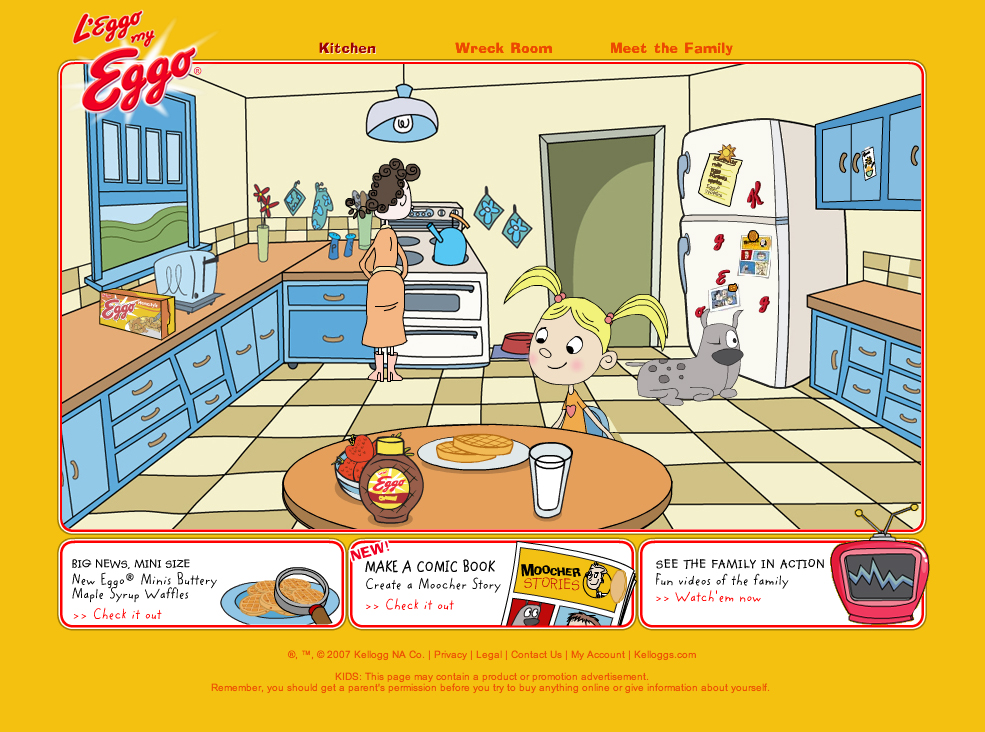
A house designed for exploring.
We used the animated family’s home as the organizing idea for the website. The kitchen led you to products in the freezer and cupboard. The Wreck Room opened up games, downloads, and TV content. Each room gave familiar brand elements a purpose, guiding visitors through the experience in a way that felt natural.
This structure let us combine product information, entertainment, and the TV campaign into one connected world. The creative direction needed to stay consistent, whether someone was opening a refrigerator door, playing a game, or seeing a campaign message.
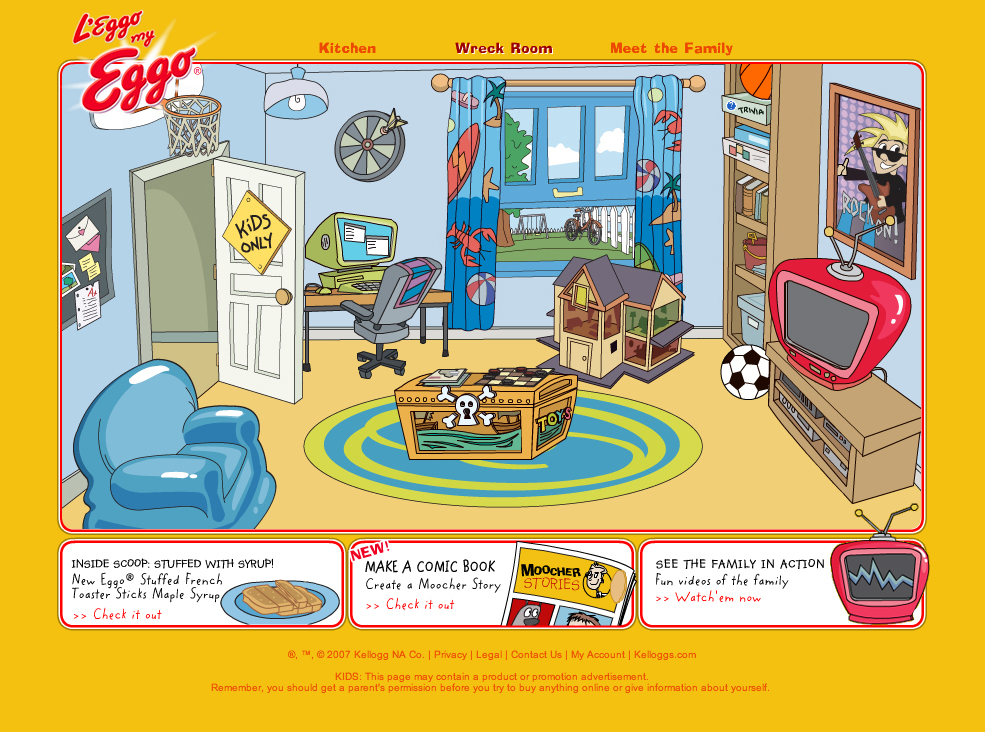
Website design states: the kitchen, product discovery, and Wreck Room.
Letting the audience step into the story.
The Moocher story builder let visitors choose panels and create their own comic. Game ideas turned the family’s determination to grab a waffle into interactive play. We also looked at how this idea could work in smaller, focused game formats within ad placements.
The main goal was to give people something specific to do with the brand. Whether they made a comic, explored a room, or tried to grab a waffle, each activity offered a new way to experience the same core idea.
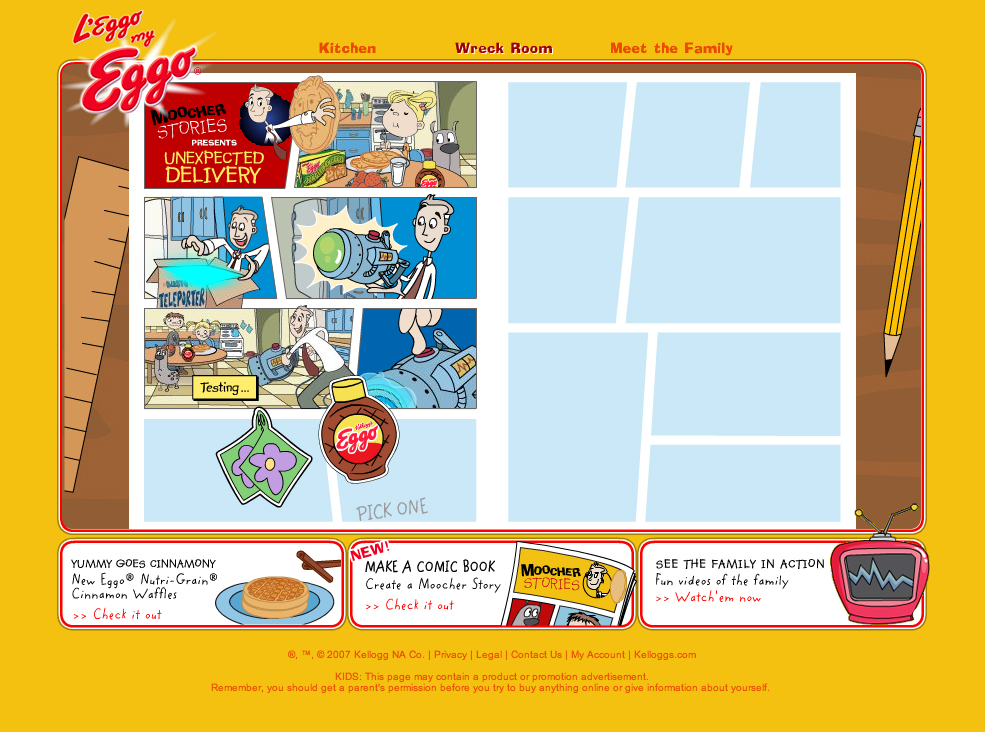
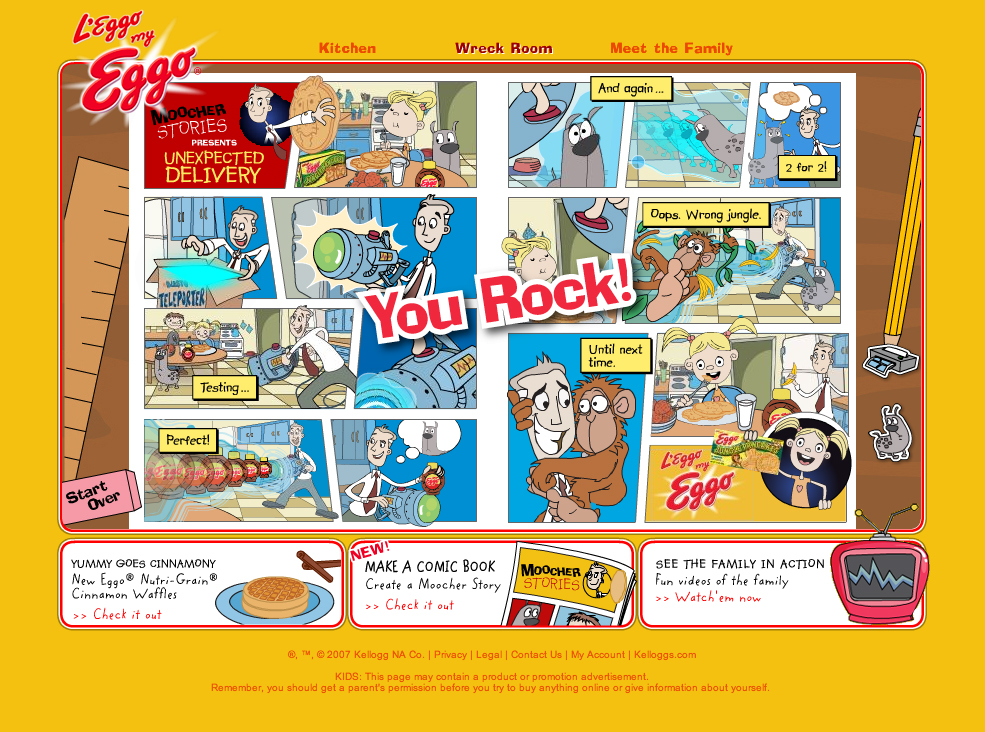
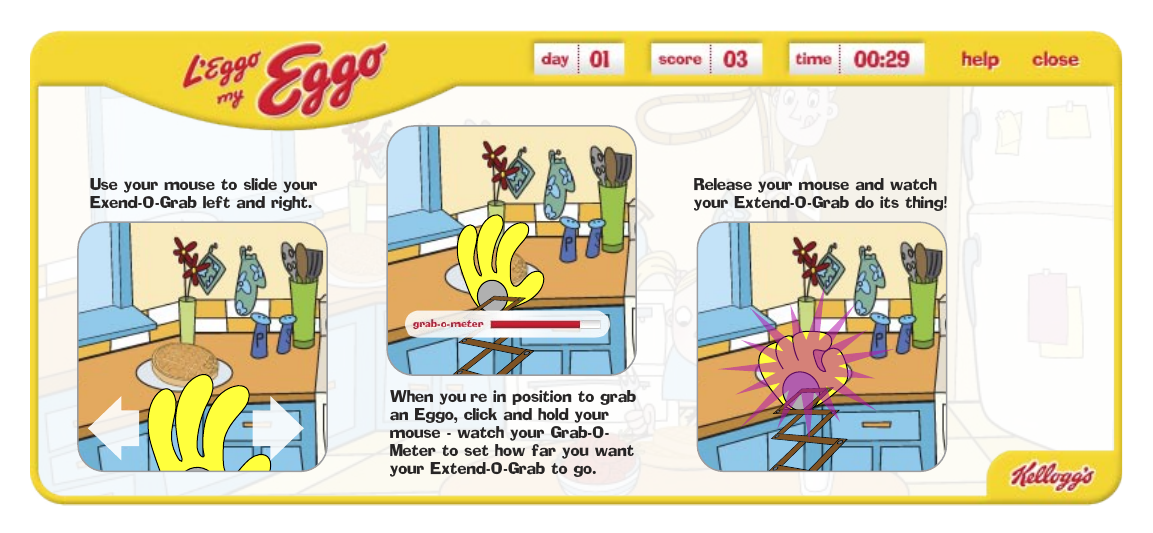
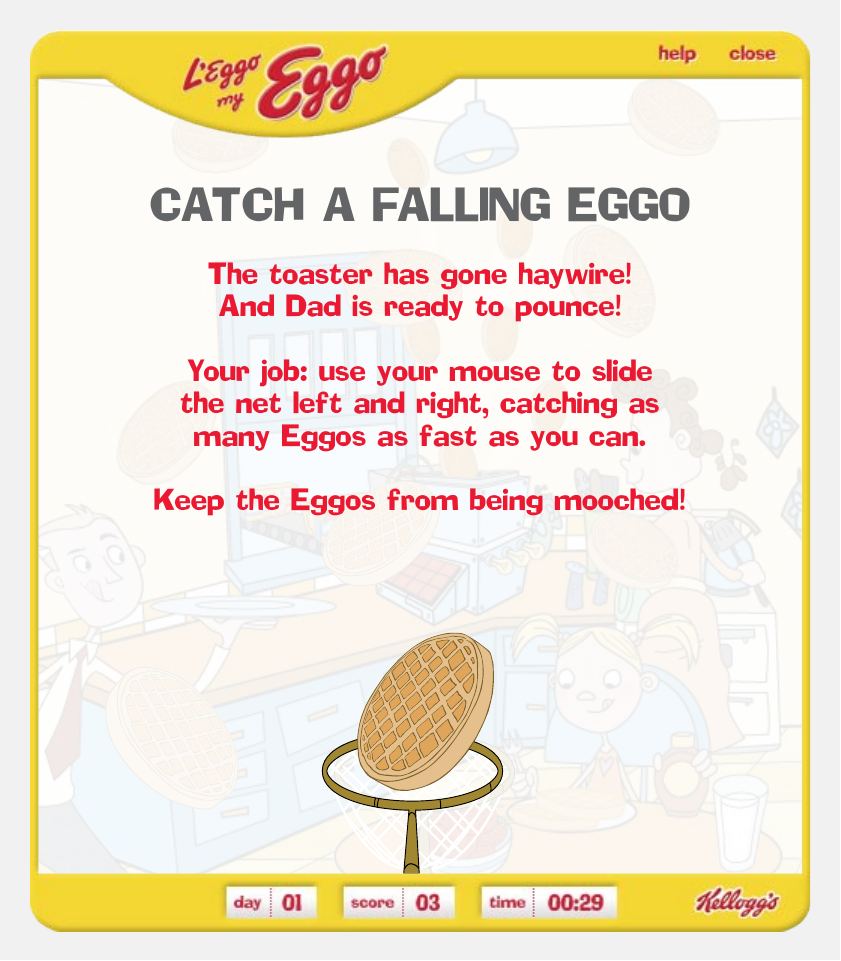
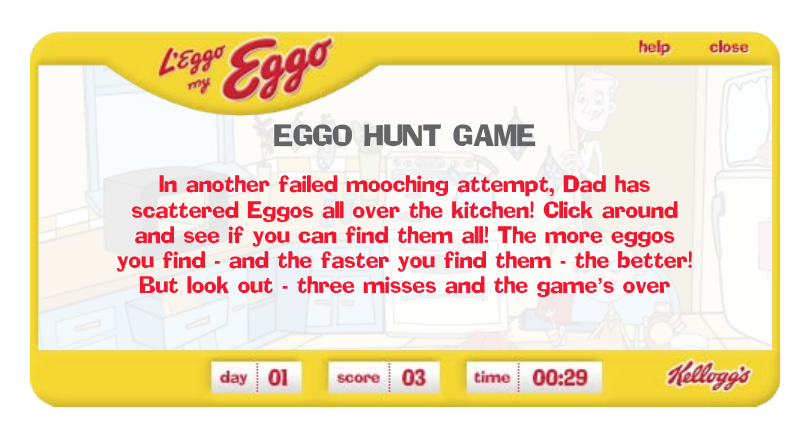
The Moocher story-building sequence, followed by original interactive-game storyboards.
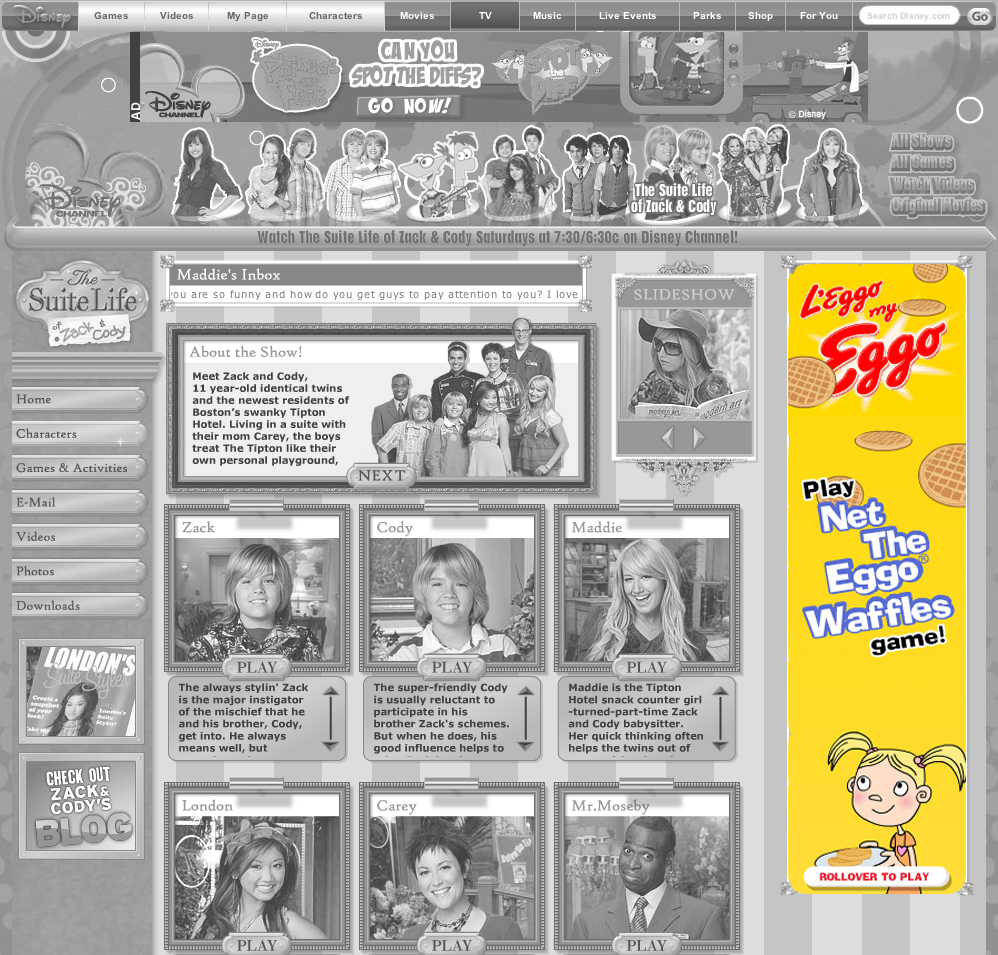
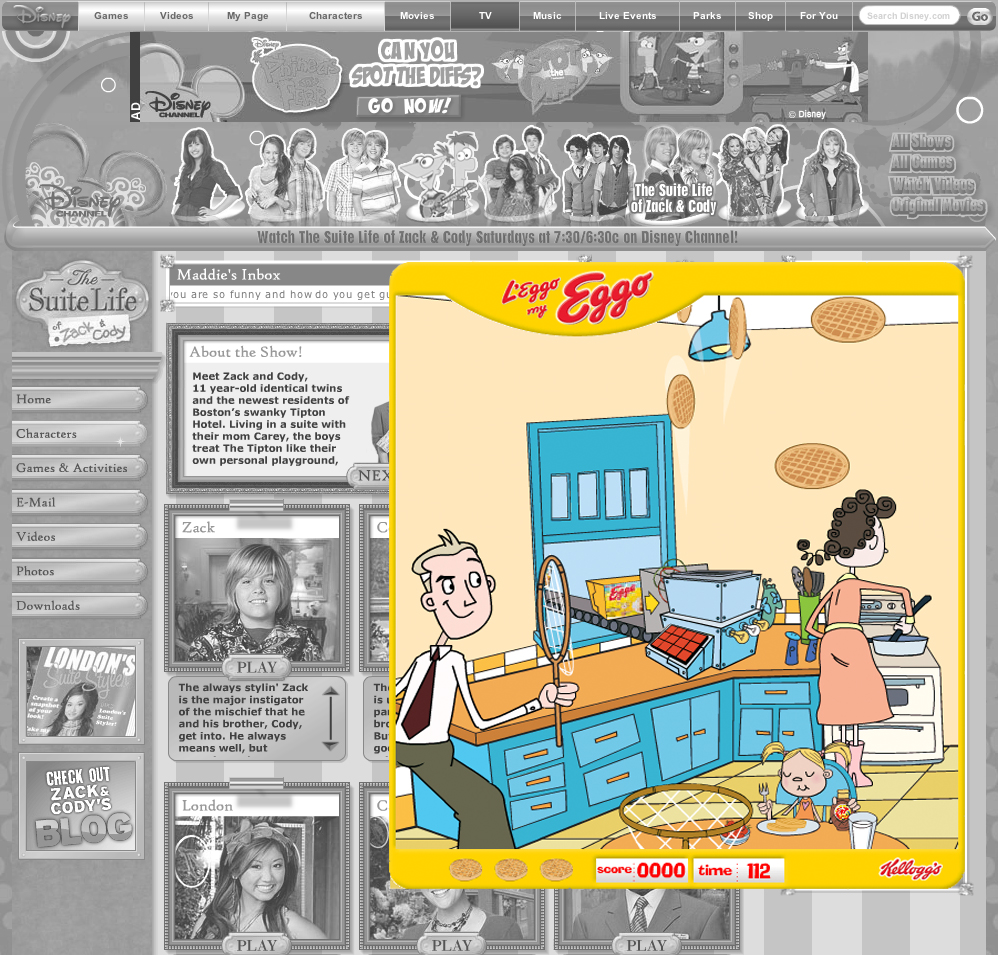
The Disney placement expands the invitation to play into a kitchen game within The Suite Life of Zack & Cody page.
Turning the media partnership into part of the game.
The Great Eggo Chase brought this approach to Nick.com. Players followed clues to find ten hidden code letters, unlocking power-ups for a new Game of the Week. A one-hour time limit and the Top Chaser Chart encouraged kids to keep searching and return. Early feedback from Nickelodeon showed strong engagement, with thousands of players joining in the first week and clear increases in both time spent and repeat play.
I worked directly with our media planning, buying, and negotiation partners to shape the Nickelodeon scavenger hunt and make sure every requirement was met.
The publisher’s pages became part of the game’s route. Creative, placement, navigation, and rewards all had to work together. Players needed to understand the clue, find the right page, reveal the letter, and know what to do next. The partnership helped shape the experience.
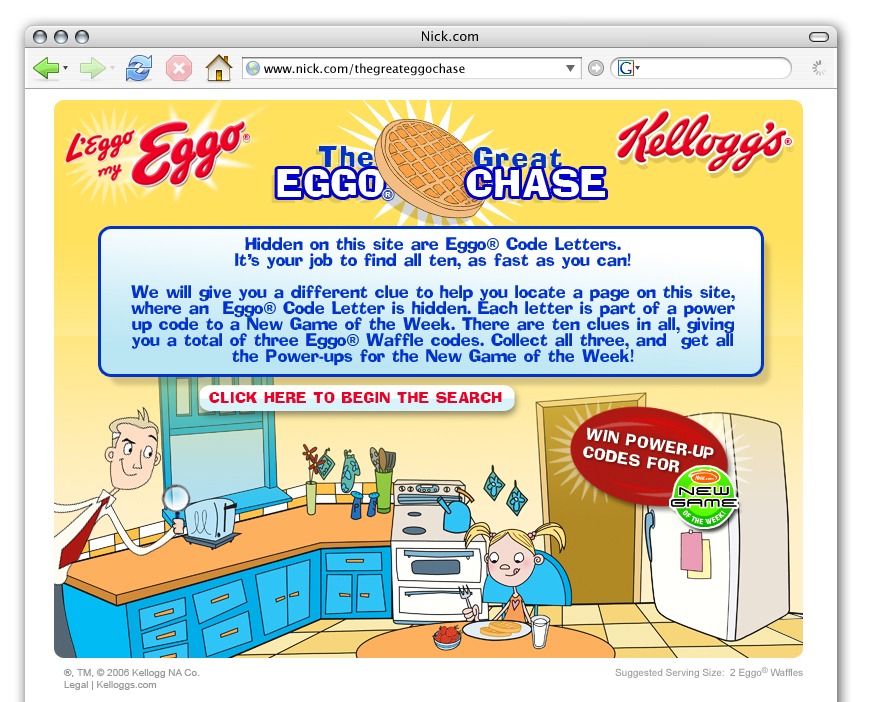
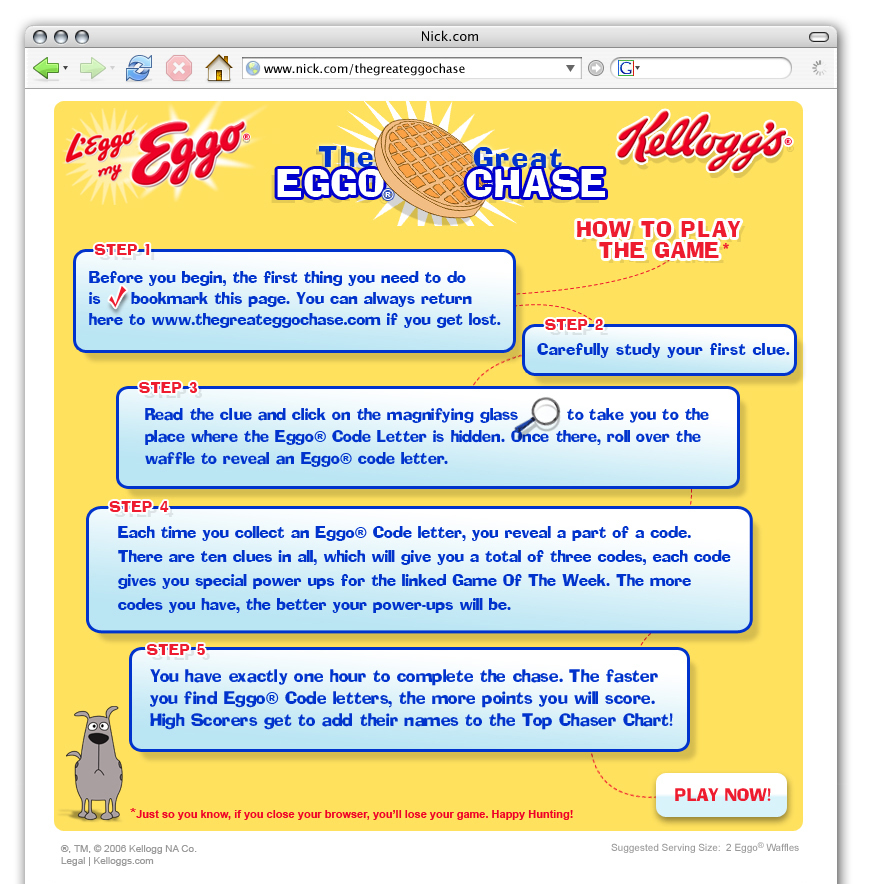
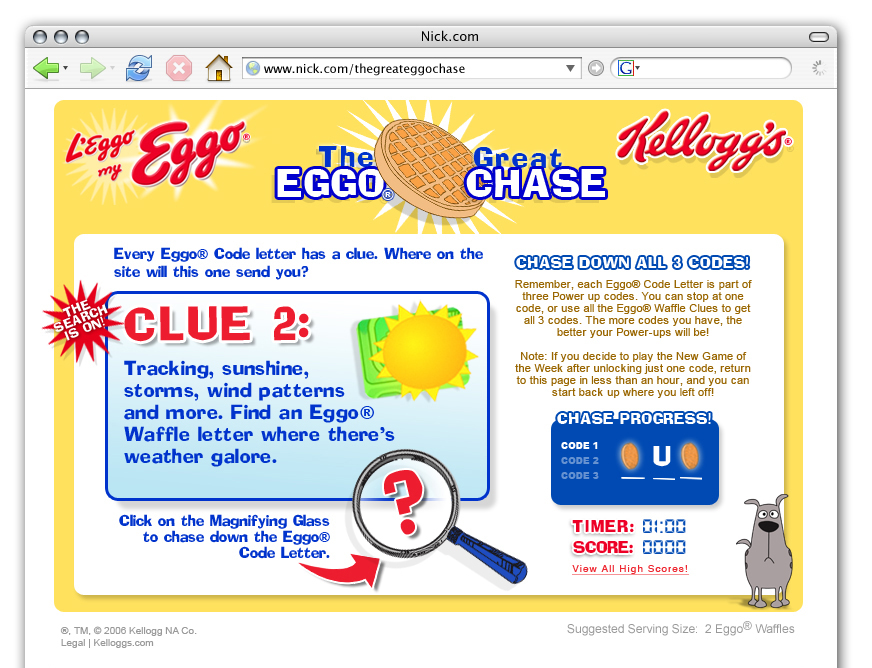
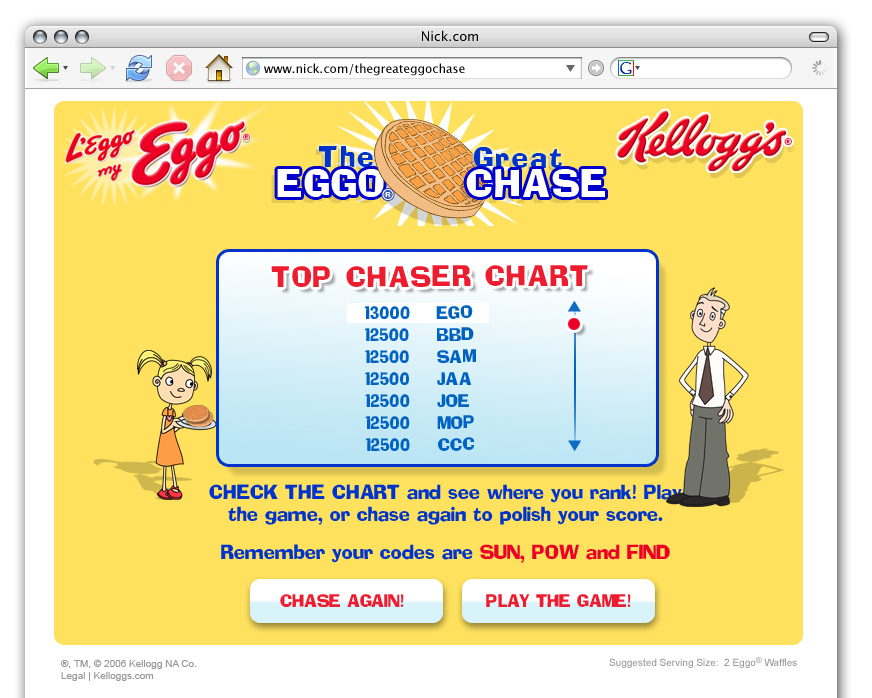
The hunt’s introduction, clue screen, and power-up sequence from the original production storyboards.
Working the idea through the real-world environment.
One challenge came when Nickelodeon sent last-minute feedback, requiring us to update the game instructions just as our timeline was getting tight. I quickly brought our Starcom partners up to speed, worked with the publisher to adapt on a tight schedule, and kept things moving while Kellogg’s was still reviewing and technical teams were still testing. By streamlining communication and setting clear next steps for each team, I made sure the updated instructions were implemented accurately and delivered on time. I also clarified Starcom’s role in managing the banners that would bring players into the hunt and organized validation of the banner mechanic across operating systems and browsers in our QA lab. The wider team worked with Nickelodeon and PointRoll on placement, tracking, rich-media loading, and clue animation. These conversations kept creative approval, publisher requirements, and technical testing moving forward together across multiple pages and systems.
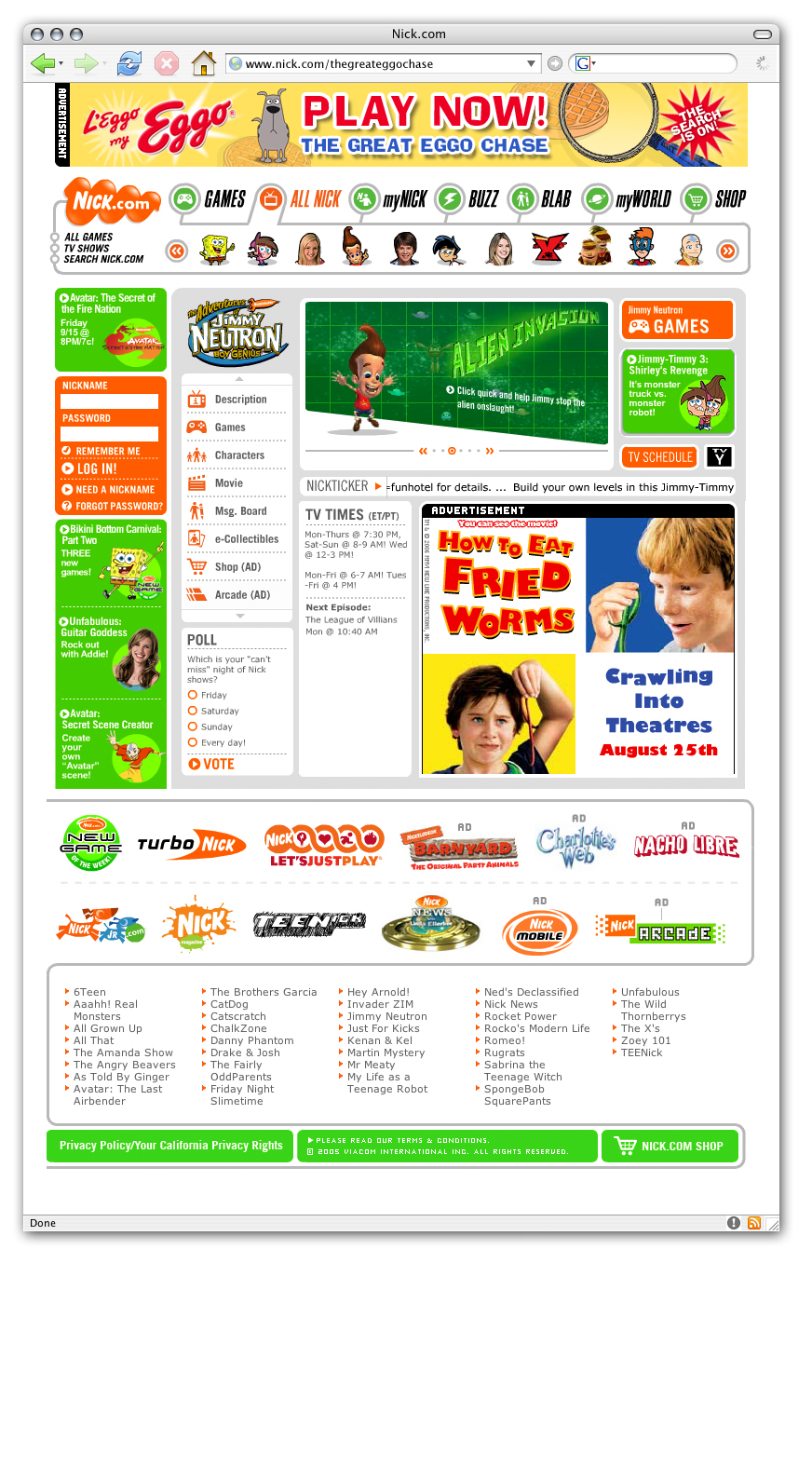
Nick.com placement comps show how the invitation to play adapted to different positions on the publisher’s pages.
What this work brought together.
This project combined an owned-brand environment, participatory content, game creative, and a publisher partnership, all anchored by one recognizable idea. Each part of the experience had a clear purpose: explore the brand, make something, play, or follow the next clue.
To me, this is a clear example of creative direction that extends into content strategy and experience design. The idea worked because we understood how people would encounter it, what would make them want to participate, and what the teams behind it needed to deliver together.
My role: creative direction; brand and experience development; partner feedback coordination; coordination across creative approval, publisher testing, and media trafficking.
Key team contributors:
- Terra Hambly:
- associate creative director and co-project lead with JT Anderson
- Julie Adams:
- lead designer, responsible for website and game visual design
- Francis Kmiceik:
- interactive design and production
- Starcom team:
- media planning, buying, and partnership management
- PointRoll support:
- rich-media implementation
- Nickelodeon/Nick.com:
- publisher partnership and content integration
I provided creative direction and led collaboration across different teams, making sure everyone stayed aligned from the first concept to launch.
Agency: Arc Worldwide. Client: Kellogg’s / Eggo. Publisher partnership: Nickelodeon / Nick.com. Media collaboration: Starcom. Rich-media implementation support: PointRoll.