NFHS | My Reason Why
This national campaign focused on what students gain from their experiences, like confidence, connection, and memories that last.
Joining a team, going to rehearsal, or just trying something new can help students find confidence, make friends, and feel like they belong. My Reason Why let those moments be heard. I led the participation strategy, creative direction, and content to connect students’ personal reasons with a national campaign that NFHS and its state associations could bring to their own communities.
Make the value personal
NFHS and Edelman had already partnered on risk and concussion communications for school sports. My Reason Why took that partnership further, creating a purpose-driven program to help students, families, and communities see the value of school sports and activities in a young person’s life.
We wanted to show the value of being part of something with others, like building confidence, belonging, curiosity, and learning together. Achievement and fitness are important, but so are friendship, self-expression, and finding what you enjoy. School activities can connect students to teams, teachers, peers, or the wider community.
The campaign welcomed all kinds of involvement, whether students tried something new, played more than one sport, or found an interest over time. Specializing year-round was one option, but every way of taking part was encouraged. Working with NFHS and Edelman, I turned that purpose into a creative idea and a real experience.
Give the story room to sound like the student
My Reason Why started with a question that each student could answer for themselves. It might be about improving, finding a place to belong, or being part of a team. These answers became the heart of the campaign and helped parents, coaches, and schools see participation from the student’s perspective.
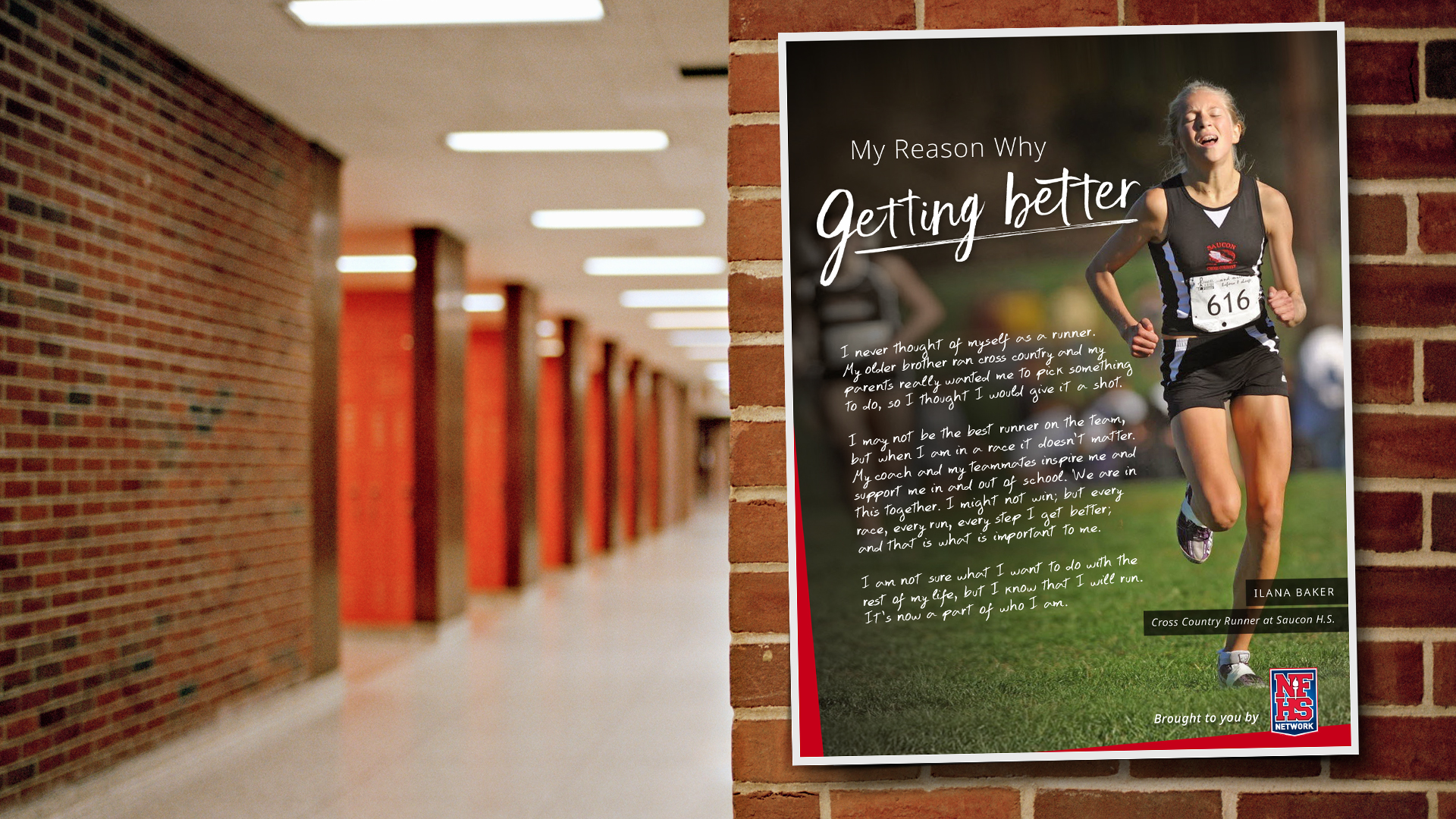
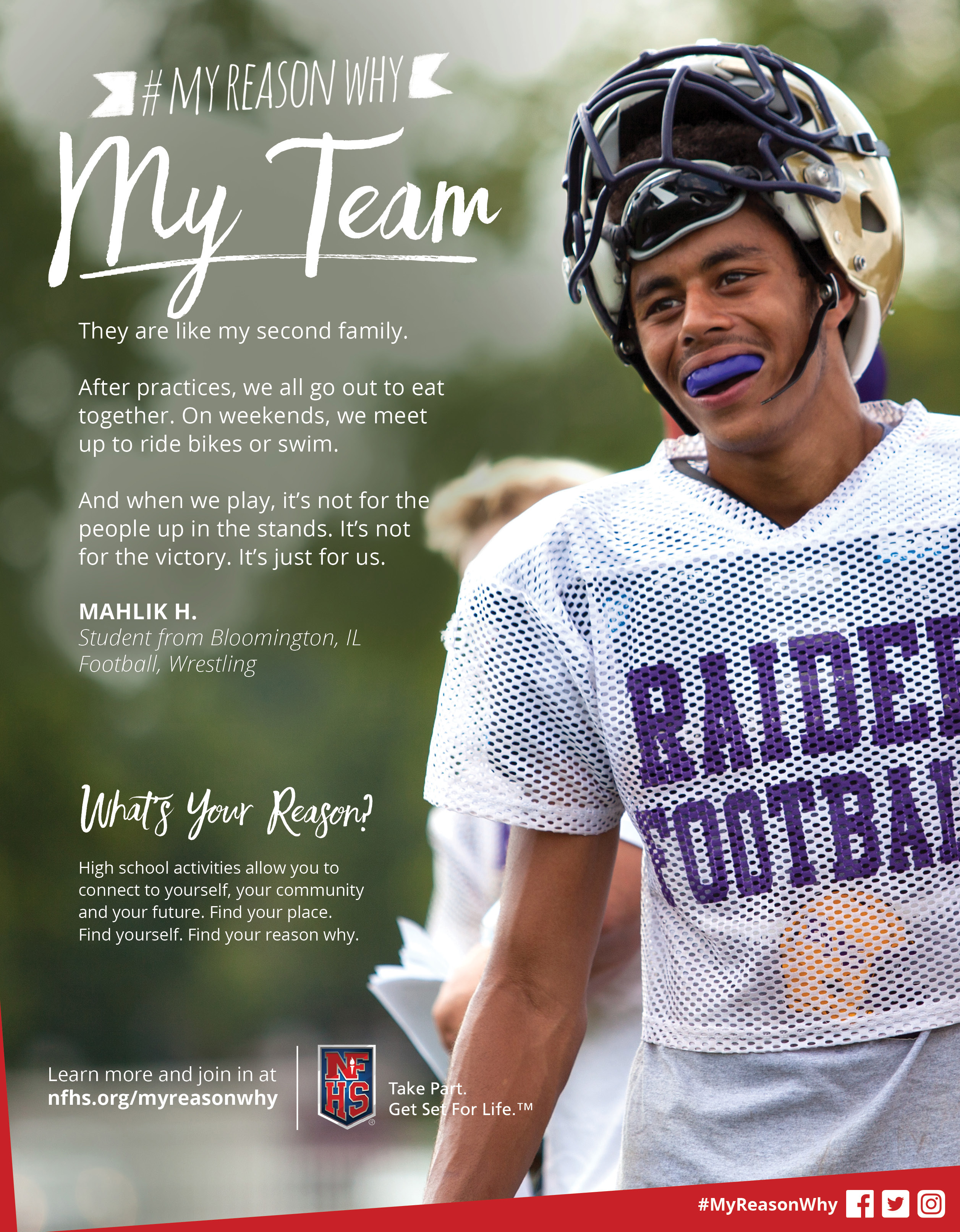
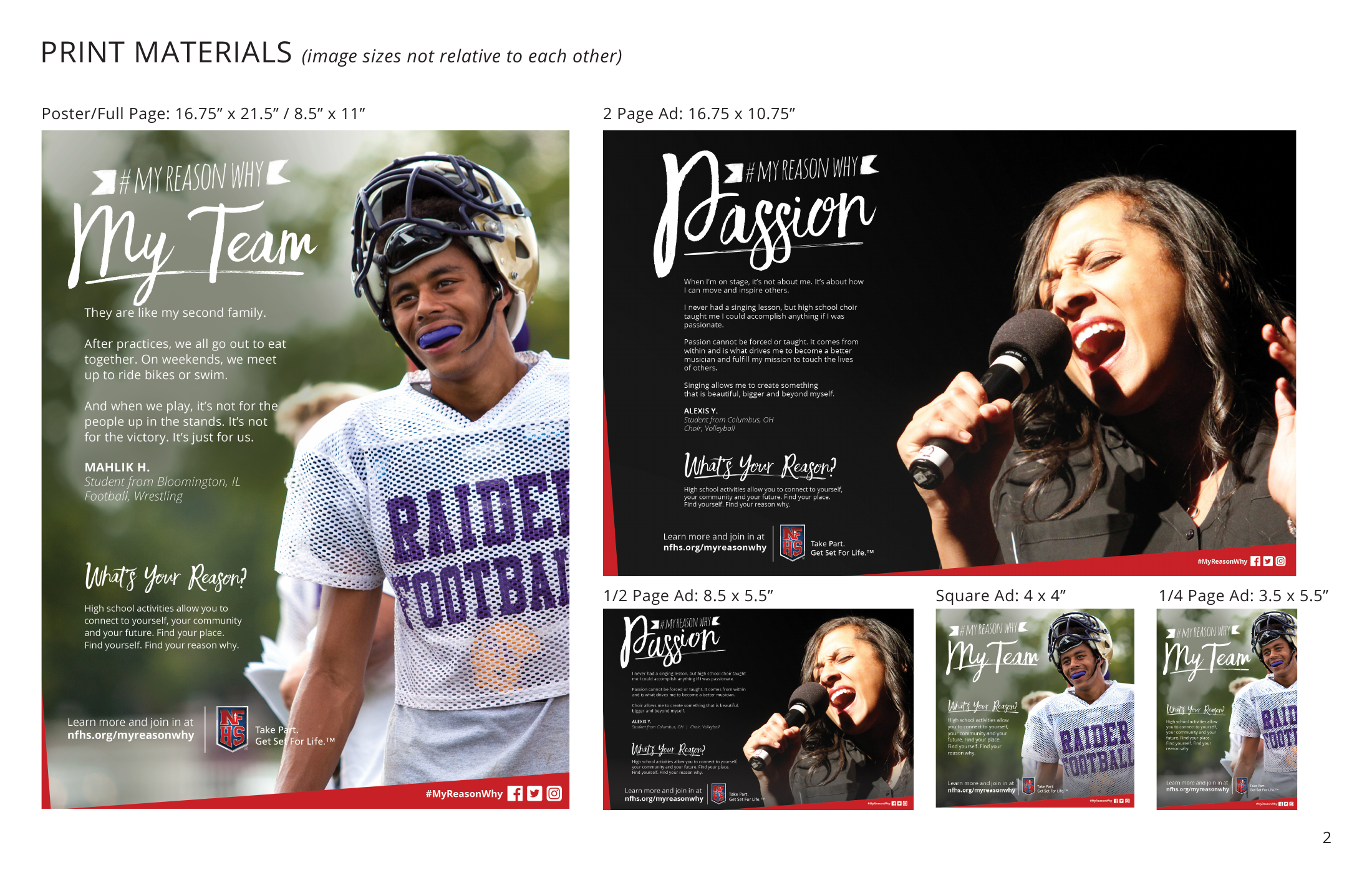
The creative direction combined portraits, short reasons, and personal stories. Film helped bring people and their experiences to life. Posters shared reasons in hallways or community spaces. A shared visual style made each piece easy to recognize. The original My Team and Passion materials showed how this style could adapt to different activities and motivations.
To keep things authentic, we made room for individual student voices. Our editorial guidance encouraged friendly, conversational language and included many different experiences. I wanted each story to feel relatable, so other students could see themselves in it. This connection kept the national message real and grounded.
Turn the invitation into a path to contribute
If we wanted students to share their reasons, we had to make it easy for them to contribute. The digital experience linked the film and campaign story to one main action: submitting a story. The landing page explained the idea, invited people to share, and guided them into the larger NFHS experience.
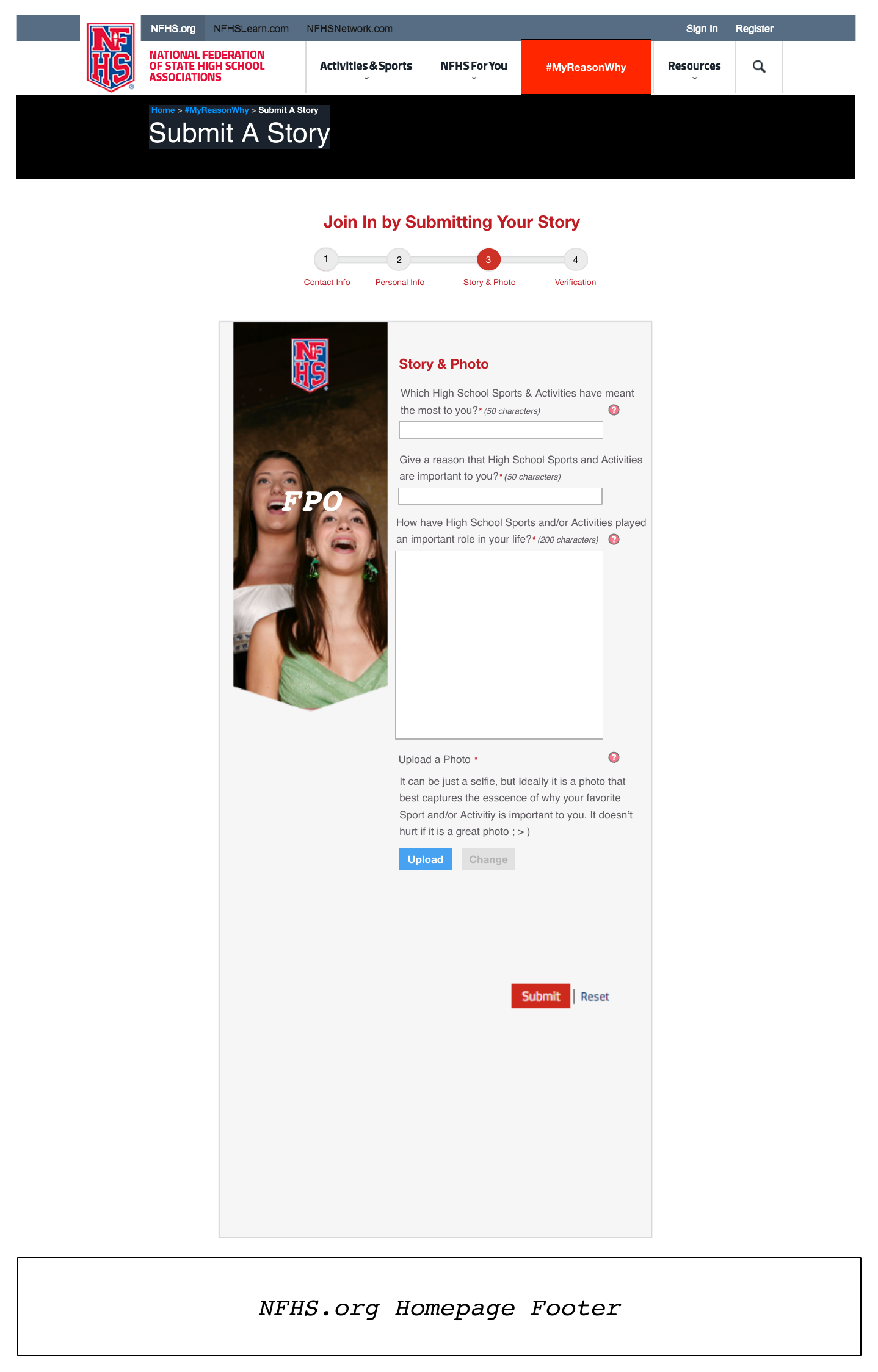
The submission process gave each story a clear path: contact information, personal details, story and photo, then verification. The prompts asked which activity mattered, why it was important, and what role it played in the student’s life. This step-by-step approach turned a personal question into something the campaign could use and share.
One of our main challenges was protecting student privacy while still encouraging real stories. Our editorial guidance required student and parent permission before stories or photographs were shared, along with careful handling of identifying details. The working wireframes connect the invitation, the interaction, and the responsibility for content in one participation path.
ACampaign landing page
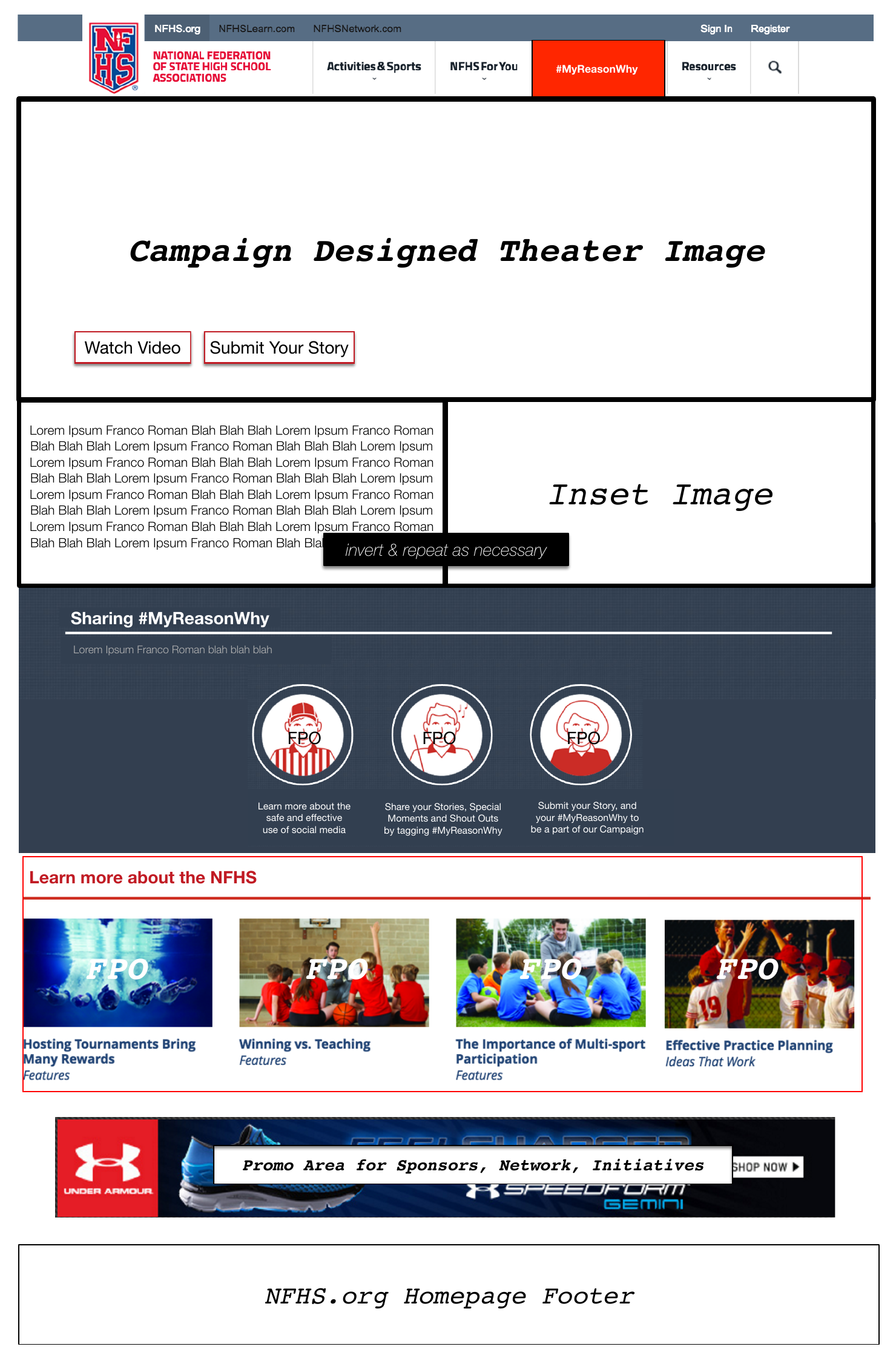
BStory & Photo submission
Build a system each state could activate
The national idea needed to work for state associations and schools in real situations. My job was to connect creative direction with materials people could actually use, like adaptable templates, campaign artwork, email samples, social media guidance, and a style guide. A working session with NFHS leadership, input from subject-matter experts, and feedback from staff helped align the program with the organization’s needs. The toolkit helped every association bring the invitation to their own community.
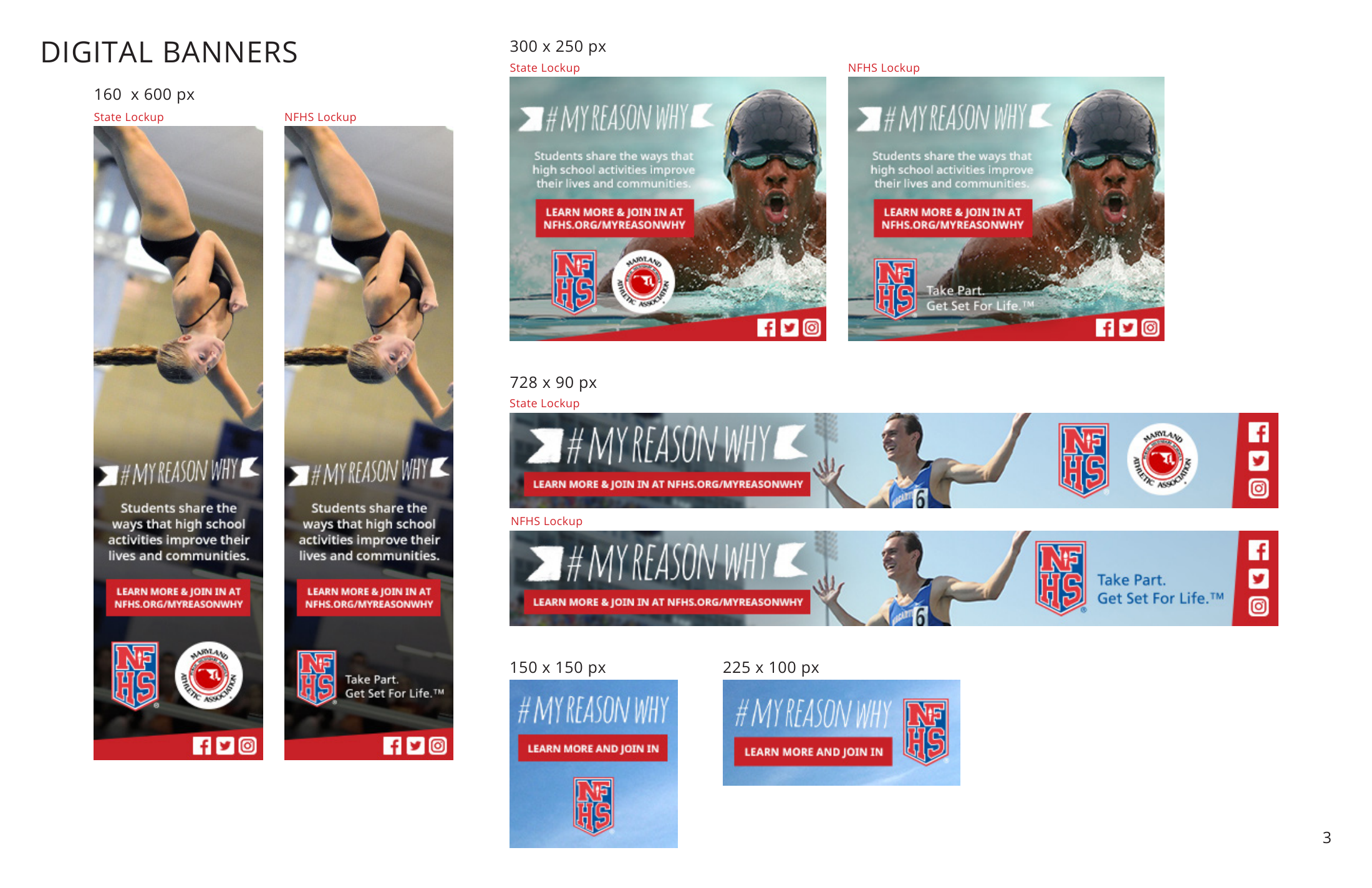
Local identity mattered. Students and parents would see the campaign through their own school, coach, event, or state association. The original banner versions kept those local connections visible while using the campaign’s shared images, name, and invitation to contribute. For example, Hawaii’s state association launched a local campaign page that invited story submissions and featured the national film. These tools helped each association share the invitation in a way that felt truly local.
Film and print could introduce a reason to care. Social activity could circulate stories. Email could invite students and families, while the website provided context and a path to contribute. The system joined those encounters around the same human question and gave the people activating the campaign a coherent set of tools for local use.
Plan for the story to keep growing
Student contributions showed that the idea could last beyond the launch. The toolkit described the landing page as a starting point to explain the campaign and collect stories, with more chances to share them and connect people later. In its second-year announcement, NFHS described an interactive website with stories and materials and announced an expanded focus on middle-school students. This process helped us see the experience as something that could grow along with the content.
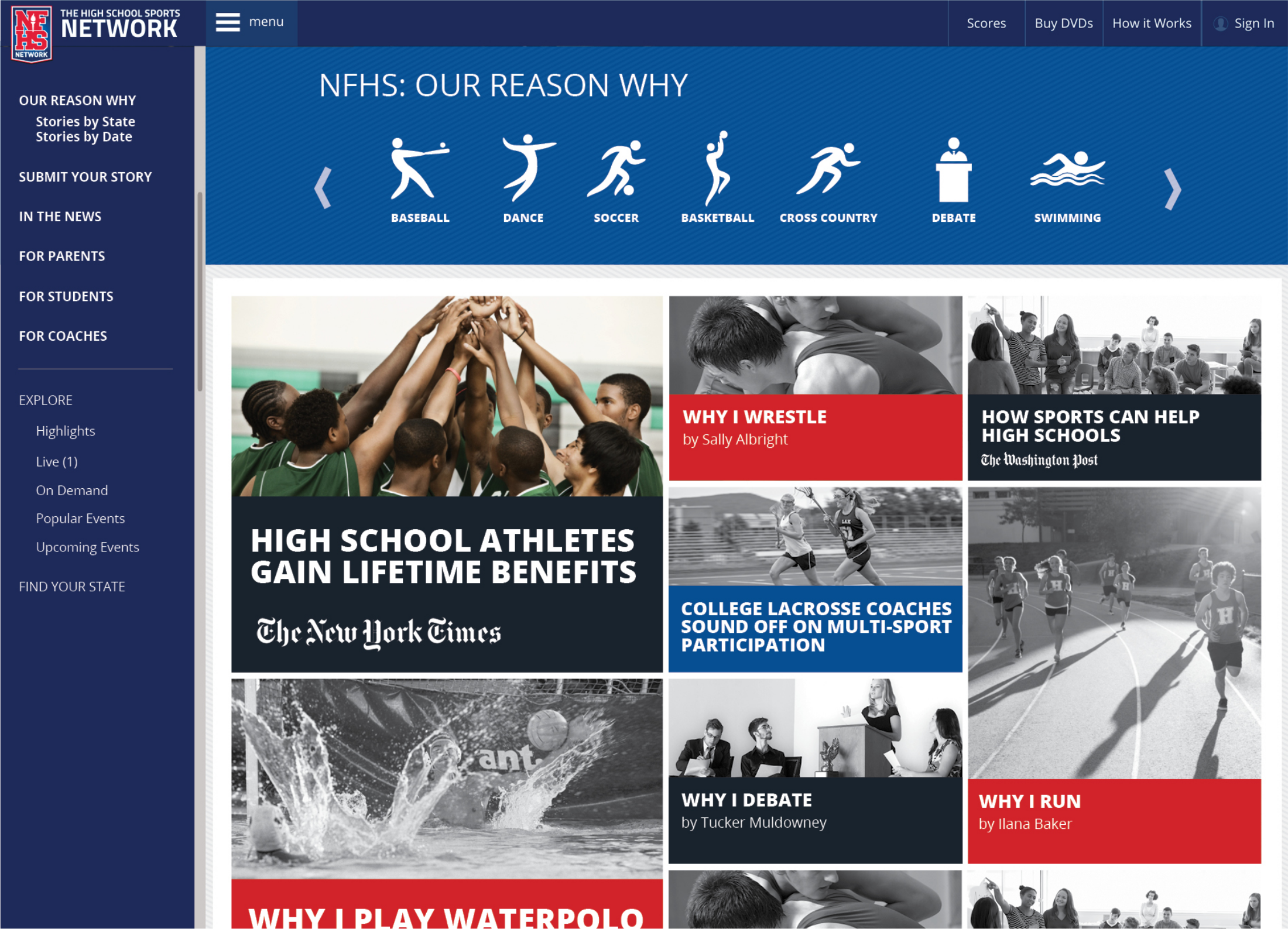
We also explored a separate content hub to organize the growing collection by activity and make it useful for students, parents, and coaches. The concept proposed a way for people to find stories that match their interests and see themselves as part of the larger community.
Give the launch a shared operating rhythm
A shared idea needed a shared launch. The toolkit combined creative assets with milestones, talking points, questions, and distribution guidance. Associations could get their web content, school communications, publications, and social calendars ready for the October 3, 2016 launch. Clear materials and a shared support path connected the national effort with local action in each community.
All 51 state associations supported the launch. NFHS reported hundreds of unique stories submitted through the campaign website by students, coaches, and administrators during the first year. These results showed how the campaign brought together personal stories, film, a digital participation path, and local tools in one invitation. The work helped the organization show the value of school sports and activities through the people who experienced them.
What stands out to me is the link between a student’s personal reason and the bigger purpose. Confidence, friendship, and learning to take part with others can matter to a student long after a season or school year ends. My Reason Why put those possibilities at the center of the creative work and built the tools that helped communities keep the idea going.
Role and collaboration
- Senior Vice President, Creative Lead · Participation strategy, digital experience and content direction · Edelman
- JT Anderson
- Campaign and digital collaboration
- Edelman campaign and digital team
- Client collaboration
- NFHS